
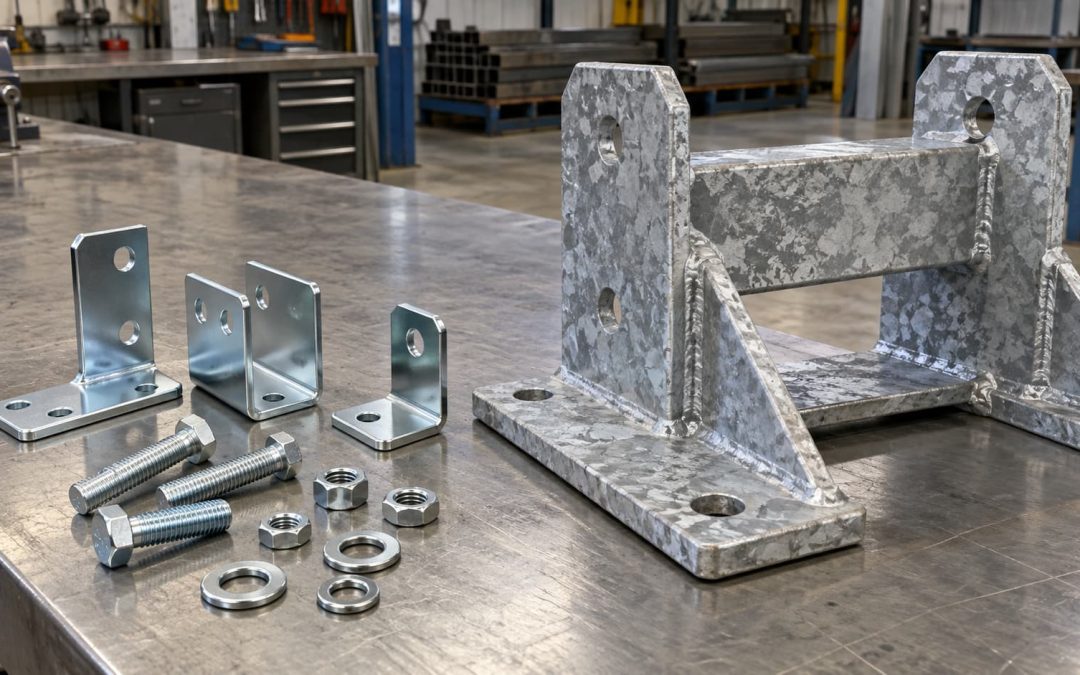
Zinc plating and galvanising both protect steel with zinc, but they suit different parts.
Zinc plating is generally better where a component needs a relatively thin, controlled finish around threads, close fits or smaller features. Hot-dip galvanising produces a much heavier zinc coating and is commonly specified where fabricated steel needs robust protection in outdoor or demanding atmospheric conditions.
The choice should start with the finished component. Tolerances, steel grade, geometry, exposure and fabrication sequence can all affect which route makes sense.
Start With What the Finished Component Needs
The better question is not simply which coating is better.
It is what the finished component actually needs.
A small threaded bracket used inside equipment has very different requirements from a welded steel frame exposed outdoors.
Before choosing either process, establish:
- where the part will be used
- whether dimensions or threads are critical
- how much coating build the design can accommodate
- whether the fabrication contains hollow or enclosed sections
- what steel grade is being used
- whether appearance is important
- whether coating is applied before or after assembly
Those factors usually narrow the choice quickly.
How Zinc Plating and Galvanising Differ
Both processes put zinc onto steel, but they do it differently.
Zinc plating deposits zinc electrochemically onto the surface. The resulting coating can be relatively thin and controlled, making it useful where dimensions and surface finish matter.
Hot-dip galvanising involves immersing prepared steel in molten zinc. The zinc reacts with the steel surface and creates a metallurgically bonded coating.
That difference affects coating build, tolerances, geometry and where each process is practical.
| Design consideration | Zinc plating | Hot-dip galvanising |
| Coating build | Relatively thin | Considerably heavier |
| Close dimensional features | Generally easier to accommodate | Requires more allowance |
| Small threaded components | Often well suited | May require thread allowances or post-treatment |
| Large welded fabrications | Possible in principle, but less typical | Common application |
| Outdoor atmospheric exposure | Depends on specified system | Frequently selected |
| Surface appearance | Usually smoother and more controlled | Characteristic galvanised appearance |
| Hollow fabricated sections | Not governed by immersion in molten zinc | Venting and drainage become important |
Use the table as a first check. The final specification still depends on the part, environment and required coating standard.
Where Zinc Plating Fits Best
Zinc plating is often the more practical choice when the component needs corrosion protection without a large increase in surface build.
That can make it suitable for parts such as:
- small brackets
- fasteners and fixings
- clips
- pressed components
- threaded parts
- smaller fabricated assemblies
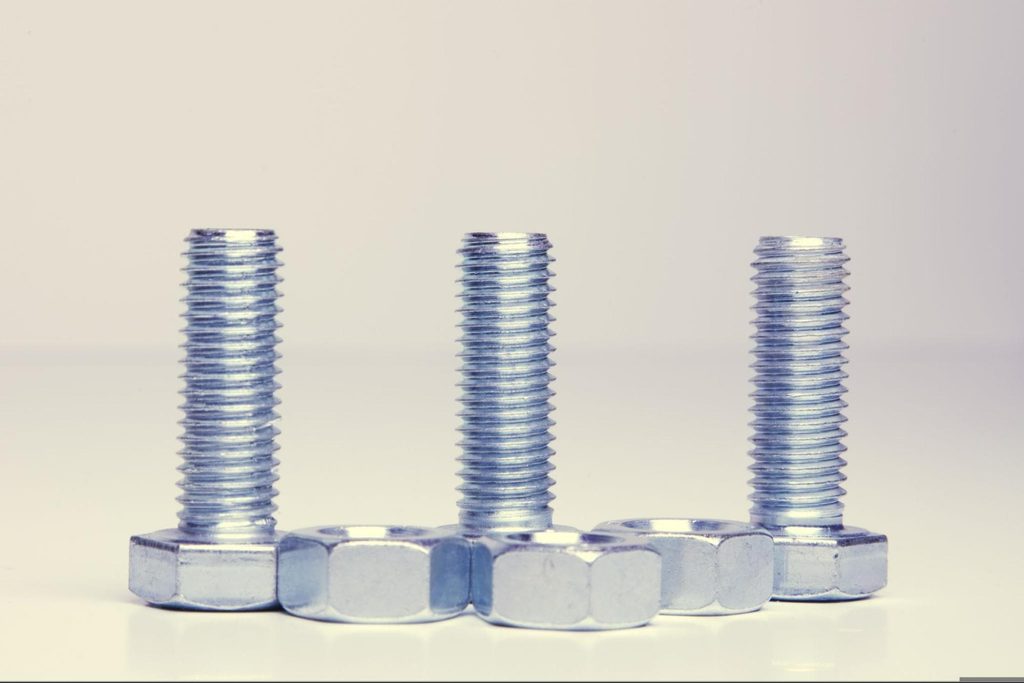
The current ISO 19598 standard for electroplated zinc and zinc-alloy coatings covers coatings on iron and steel with Cr(VI)-free supplementary treatments. It includes requirements relating to coating designation, minimum thickness and corrosion resistance.
That matters because “zinc plated” on its own does not define one universal finish.
If performance is important, the specification may also need to state the required coating system, minimum thickness, supplementary treatment or corrosion requirement.
Where Hot-Dip Galvanising Makes More Sense
Hot-dip galvanising is usually considered where a heavier zinc coating is appropriate, and the component has been designed for the dipping process.
Examples include:
- steel frames
- supports
- external brackets
- barriers
- larger welded fabrications
- equipment exposed regularly to weather
The Galvanizers Association’s guidance on EN ISO 1461 explains that the standard defines requirements for hot-dip galvanised coatings on fabricated iron and steel articles. Minimum coating requirements vary according to factors including the thickness and type of material.
This does not mean galvanising is automatically the right answer whenever a part goes outdoors.
A heavier coating can provide useful corrosion protection, but it also becomes part of the component’s finished dimensions and can influence the design.
Tolerances Can Decide the Finish
Consider a hole, threaded feature or mating face that needs to fit another component after coating.
Any finish added to that surface changes its dimensions.
With zinc plating, the relatively thin coating can make dimensional allowance easier to manage on detailed components.
Hot-dip galvanising introduces more coating build, so features such as these deserve attention:
- internal and external threads
- close-fitting holes
- slots
- mating faces
- hinges
- sliding features
- assemblies with limited clearance
That does not make hot-dip galvanising unsuitable for accurately fabricated work. It means the required finished condition needs to be reflected in the drawing and design.
Where finish requirements affect dimensions or assembly, our sheet metal CAD service can support the wider design-to-manufacture process before parts reach production.
A Galvanised Fabrication Must Be Designed for the Dip
Part geometry becomes particularly important with hot-dip galvanising.
Because the complete fabrication is immersed in molten zinc, hollow sections and enclosed spaces cannot simply be treated like solid plate.
Air needs a route to escape, and molten zinc needs a route into and back out of the fabrication.
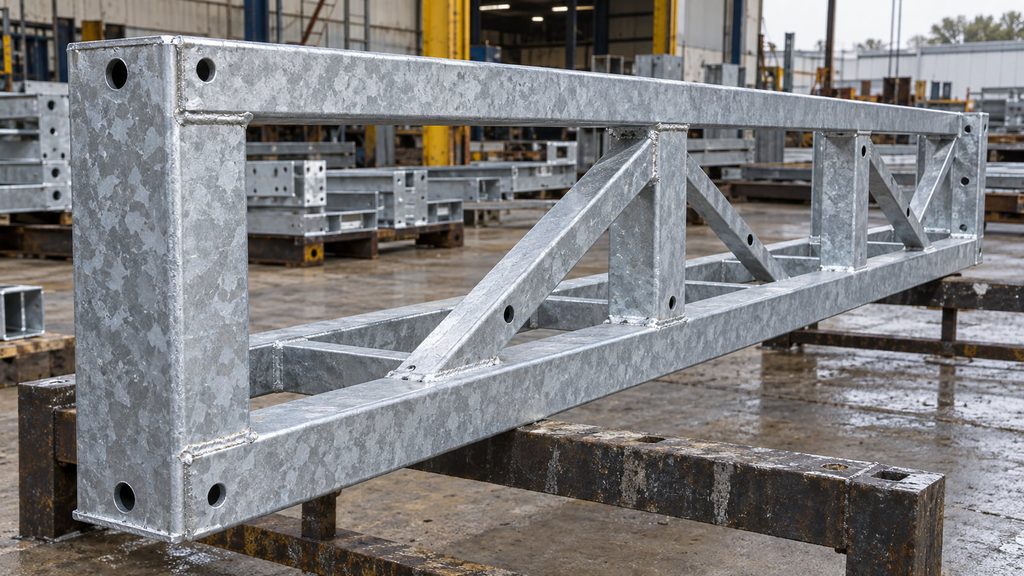
The Galvanizers Association provides specific venting and drainage guidance for hot-dip galvanising, including requirements for sealed hollow sections.
That makes venting and drainage a design issue, not something that should be discovered after the fabrication has been welded together.
When the coating is applied can be just as important as which coating is chosen. Where a fabricated component is destined for galvanising, holes, enclosed sections, overlapping surfaces and welding details may need to be considered before fabrication is complete.
Steel Grade Matters for Zinc Plating Too
Geometry is not the only concern.
Electroplating can introduce hydrogen into steel during processing. For higher-strength materials, that can create a risk of hydrogen embrittlement if the material and treatment route are not properly considered.
ISO 19598 includes specific requirements relating to hydrogen embrittlement and high-strength steel components.
So if a component uses high-strength steel or performs a safety-critical function, “zinc plate” should not be treated as a generic finishing note added at the end of the drawing.
The grade, strength level and relevant specification should form part of the finishing decision.
Do Not Confuse Pre-Galvanised Sheet With Hot-Dip Galvanising After Fabrication
This distinction is important.
Pre-galvanised sheet has its zinc coating before the sheet is cut, folded or otherwise fabricated.
Post-fabrication hot-dip galvanising coats the completed steel fabrication after manufacturing operations have taken place.
Those routes are not equivalent.
Cutting pre-coated material creates exposed edges and features, while galvanising after fabrication treats the completed article as a whole.
If corrosion protection is important, the drawing should make clear whether the requirement relates to the incoming material or the finished component.
A Simple Decision Route
Rather than choosing from the finish name alone, work through the part requirements in order.
Choose zinc plating when:
- a relatively thin coating is important
- threads or close-fitting features need tighter dimensional control
- the component is comparatively small or detailed
- a smoother metallic finish is required
- the specified plating system provides sufficient protection for the intended environment
Consider hot-dip galvanising when:
- the component is a larger steel fabrication
- heavier zinc protection is appropriate
- outdoor or atmospheric exposure is a major design factor
- the geometry can accommodate the galvanising process
- coating build can be allowed for in the design
- hollow sections can be correctly vented and drained
There will be applications where either process could potentially work. The correct specification then comes down to which combination of corrosion performance, geometry, dimensional control and appearance matters most.
Specify the Finish Before Manufacture
The finishing decision should sit alongside fabrication rather than being treated as an afterthought.
A plated component may need critical threads or dimensions identified on the drawing. A fabrication intended for hot-dip galvanising may require changes to venting, drainage or assembly details before welding begins.
Our sheet metal fabrication service covers the wider manufacturing stages involved in turning sheet metal and fabricated components into finished parts. Identifying the intended coating early helps keep those manufacturing requirements aligned with the drawing.
Where Alternative Precision Fits
At Alternative Precision, we can coordinate BZP plating as part of the wider fabrication process. Our metal finishing services page sets out the finishing options available for fabricated components.
If your drawing calls for a zinc-based finish, visit our metal finishing services page to see the options we can support and make the required coating clear before manufacture begins.
Zinc Plating or Galvanising?
For smaller or more dimensionally sensitive components, zinc plating is often the better fit.
For larger fabricated steelwork where a heavier zinc coating and atmospheric corrosion protection are the priorities, hot-dip galvanising is often more appropriate.
Neither finish should be specified by habit.
The part’s geometry, steel grade, tolerances, exposure conditions and manufacturing sequence should decide the finish. If those details are clear before fabrication starts, the coating becomes part of the engineering specification rather than a problem to solve afterwards.